
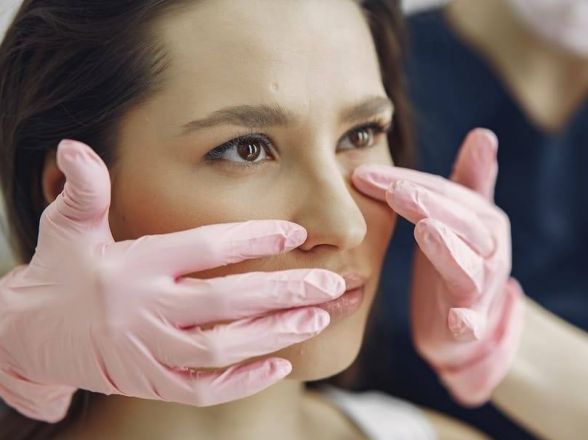
Cosmetic Rhinoplasty focuses on improving the shape, size and proportions of the nose to create better facial balance. The goal is not to create an identical nose for every patient. Each procedure is planned according to the person’s facial structure and desired appearance.
Cosmetic Rhinoplasty Goals
A cosmetic procedure may address several visible concerns. These can include a prominent nasal hump, uneven bridge, wide nasal bones, an overly large or small nose, a drooping tip or an asymmetrical appearance.
The surgeon studies how the nose relates to the forehead, cheeks, lips, chin and overall facial profile. Small structural changes can sometimes create a noticeable improvement in facial proportions.
Nose Shape and Facial Proportions
The nose sits at the center of the face so its proportions can strongly affect overall appearance. A nose that looks large from one angle may appear balanced from another.
Surgeons consider the patient’s facial width, profile, skin thickness, nasal length and tip shape when planning the procedure. This helps avoid results that look out of proportion with the rest of the face.
Cosmetic Rhinoplasty Treatment Areas
Cosmetic Rhinoplasty can modify different parts of the nasal structure. The surgeon may reduce or reshape the nasal bridge, refine the tip, adjust the nostrils or improve overall symmetry.
Some patients need only a small structural adjustment while others require changes to several areas. The exact approach depends on the existing anatomy and the desired result.
Cosmetic Rhinoplasty Techniques
There is no single technique that works for every patient. Some procedures involve changing the nasal bones while others focus mainly on cartilage or soft tissue.
The surgeon may use different techniques to reduce a hump, narrow the bridge, refine the tip or improve the relationship between the nose and upper lip. The treatment plan should match the patient’s anatomy rather than follow a fixed template.
Cosmetic Rhinoplasty Candidate Criteria
Adults with stable nasal development and realistic expectations may be considered for cosmetic Rhinoplasty. Suitable patients may have concerns about nose size, shape, symmetry, bridge appearance or tip definition.
Good general health is also important for elective surgery. During consultation, the surgeon reviews the patient’s medical history and discusses previous nasal procedures, medications, allergies and any breathing concerns.
Planning Before Surgery
A consultation helps set realistic goals. The surgeon examines the nose and discusses concerns such as the tip, bridge, profile or overall shape. Photos and clinical assessment help create a suitable treatment plan.
Cosmetic Rhinoplasty Surgical Process
Cosmetic Rhinoplasty is performed under anesthesia. The surgeon makes carefully planned changes to the nasal bones, cartilage or soft tissues based on the treatment plan.
The procedure may involve reducing a nasal hump, reshaping cartilage, refining the tip, narrowing the nasal bones or adjusting the nostrils.
The surgeon aims to maintain structural support while creating the planned shape. Preserving proper support is important because excessive removal of tissue can affect both appearance and nasal function.
Recovery
Swelling and bruising are common during the early recovery period. These changes usually become less noticeable as healing progresses.
Patients may need to avoid pressure on the nose and protect it from accidental injury. Strenuous physical activity may also be restricted for a period recommended by the surgeon.
The nose continues to heal after the initial recovery stage. Changes can become more subtle over time as swelling decreases and the deeper tissues settle.
Results
The final appearance depends on several factors. These include skin thickness, cartilage strength, bone structure, healing response and the amount of change required.
Thicker skin may make fine tip definition less visible. Previous nasal surgery can also make treatment more complex because the natural structure may have already been altered.
Following postoperative instructions can support a smoother recovery and help protect the surgical result.
Cosmetic Rhinoplasty and Breathing
Cosmetic Rhinoplasty mainly focuses on appearance but the surgeon should still consider nasal function during planning. Changes to the internal or external structure should not unnecessarily compromise airflow.
Patients who have breathing difficulties should mention them during consultation. The surgeon can then determine whether functional concerns also need to be addressed.
Qualified Surgeon
Choosing an experienced surgeon is an important part of the process. Patients should review the surgeon’s qualifications, experience with nasal procedures, treatment approach and follow-up care.
People searching for Best Rhinoplasty Surgery in Lahore should focus on proper consultation and realistic expectations rather than choosing a clinic based only on price.
At Institute Cosmetique patients can discuss their nasal concerns with qualified specialists and receive an assessment based on their individual facial structure and treatment goals.
Sum up
Cosmetic Rhinoplasty results develop gradually as swelling continues to settle. The final appearance should be judged after sufficient healing rather than during the early recovery period.
A successful result aims for a nose that looks natural and fits the patient’s facial proportions. The focus should be on balanced improvement rather than an overly altered appearance.