
Hydrating adds water to your skin. Moisturizing keeps that water from escaping by covering the skin with a thin, soft layer. Skin needs both. Water gives it a plump, fresh look, and the sealing layer keeps it soft and comfortable for hours. Most good creams do some of each, but they do not always do both equally well.
Water and Oil Are Two Different Needs
Think of your skin like a garden. Water makes the plants grow, but without a layer of soil and mulch on top, the water dries up quickly. Skin works the same way.
- Water gives skin bounce and freshness.
- Oils and soft butters form a cover that stops the water from leaving.
If your skin only gets water, it feels good for a few minutes and then goes tight again. If it only gets a heavy layer, the cover sits on skin that was already thirsty. The best results come from giving skin both.
Dry Skin and Thirsty Skin Are Not the Same
This is the part many people miss.
Dry skin does not make enough natural oil. It feels rough, flaky and tight, and it often looks dull.
Thirsty skin lacks water. It can still be oily. It may look shiny and feel tight at the same time. Fine lines look sharper, and makeup can look patchy.
You can have both problems at once. Many people with shiny skin in Pakistan’s hot summers have thirsty skin without knowing it. They skip skincare because they feel greasy, and the skin makes even more oil to protect itself.
How the Ingredients Split the Work
Product labels look long and confusing, but most useful ingredients fall into two groups.
| Job | What it does | Common examples |
| Pulls water in | Draws water into the top layer of skin and holds it there | Hyaluronic acid (sodium hyaluronate), glycerin, urea |
| Seals water in | Forms a soft cover so water stays inside | Shea butter, petrolatum, squalene, plant oils, ceramides |
A few ingredients, like ceramides, also help the skin’s natural cover stay strong. That is why they show up in so many creams made for tight, sensitive skin.
Which One Does Your Skin Need More?
Use this simple guide.
Oily or shiny skin: Focus on water first. Pick a light cream that feels fresh and does not leave a film.
Normal or mixed skin: Use a balanced cream. Your T-zone may need less, and your cheeks may need more.
Dry or flaky skin: Seal more. Look for creams with butters, petrolatum or ceramides.
Skin that feels tight after washing: This is a sign that both are missing. Add a cream right after you wash, while skin is still a little damp.
Seeing the Difference in Real Products
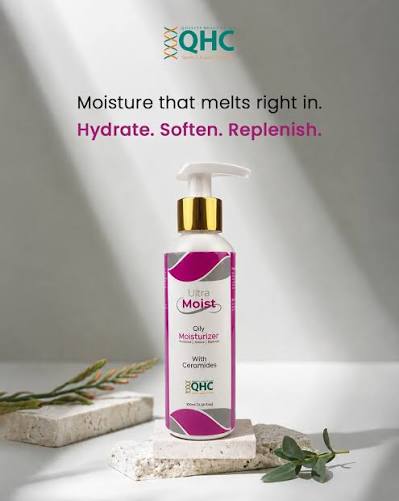
QHC’s Ultra Moist Oil-Free Moisturizer is a good way to see both jobs in one jar. Its ingredient list includes sodium hyaluronate, which pulls water in. It also lists ceramides, olive squalene and a few plant oils, which help keep that water from leaving. The product page says it is made for oily and combination skin, so the feel is meant to stay light.
For skin that is very dry, QHC’s Ultra Moist Gel Moisturizer leans more towards sealing. Its key ingredients include liquid paraffin and a petrolatum blend, which form a cover on the skin. The page says it can be used on both face and body.
You can see the full range in the QHC moisturizer collection.
The Right Order to Apply Things
The order matters because water-based products should go on first.
- Wash your face with lukewarm water and leave it slightly damp.
- Apply any water-rich product, like a light serum or gel.
- Apply your cream on top to seal it in.
- In the morning, finish with sunscreen.
Skipping step 3 is a common reason skin feels dry by afternoon.
Common Mistakes
- Using only a cream on very dry skin and expecting water. A cover alone cannot add water that was never there.
- Using only a gel on very dry skin. Water without a cover leaves quickly.
- Applying cream on fully dry skin. A slightly damp face absorbs better.
- Using too much. A small amount is enough for the whole face. More does not mean more benefit.
- Skipping moisturizer on oily days. Thin skin still loses water, and oil production can go up.
How the Weather Changes Things
In summer, heat and sweat make skin lose water fast, even if it looks oily. A lighter cream and plenty of drinking water usually work best.
In winter, cold air and heaters remove natural oil. Skin often needs a thicker cover then, especially on the hands, elbows and lips.
Many people use one light cream in summer and a richer one in winter. That is a smart way to follow your skin instead of fighting it.
When to See a Skin Doctor
Creams help with everyday dryness. See a skin doctor if your skin cracks, bleeds, itches badly or stays red even after a few weeks of regular care. These signs can mean something more than simple dryness.